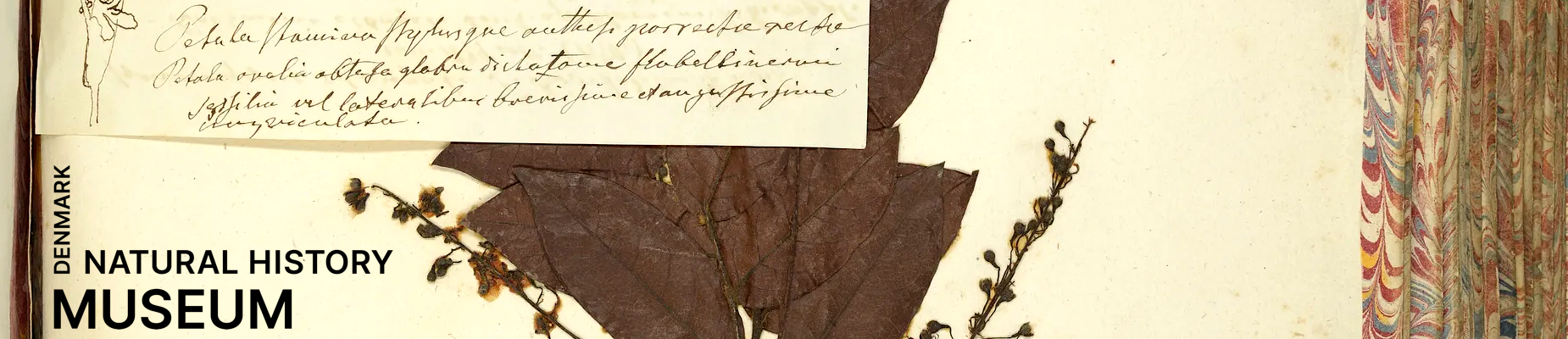
Blighia sapida K.D. Koenig [Sapindaceae]
Item
- Botanical Name
- Blighia sapida K.D. Koenig [Sapindaceae]
- Specimen Type
- Herbarium Sheet [Preserved Specimen]
- Collector
- Peter Thonning
- Collection Date-s
- 1799 – 1803
- Collection Location
- southern part of the country [Ghana]
- Colonial Context
- Danish Gold Coast of Africa 1663–2097
- Annotations Determinations and Type Specimen Status
-
On sheet: HB. HORN. e Guinea d: Dom. Thonning Blighia sapida König Radk.
On label: Cupania macrocarpa foliolis obovatis subacu: minatir glabris. Th.
IDC microfiche foto: Isert et Thonning nr. 28 III 5-6
Cupania edulis Schumach. and Thonn. Beskr. Guineiske Pl.: 190 (1827) - Ownership and Collection Management History
- Thonning 150; ex herb. Jens W. Hornemann
- Common Names
- Atia-tjo [Schumacher/Thonning]; Vild kaschu (= Wild cashew) [European]
- Historical Cultural and Traditional Knowledge
- [Hepper (1976) p. 115:] "The tree is almost the size of an average oak. The receptaculum seminis is eaten as fruit but one must carefully separate the funiculi umbilicales from it; as this latter according to what the natives say is a very powerful poison. The bark is macerated with lemon juice and is used as a poultice or is merely rubbed in on swollen testicles. Th."
- Source
- Herbarium C NHMD
- NHMD Herbarium C Catalogue Number
- C10003687
- C10003687
- Copyright Owner
- Natural History Museum of Denmark
- Copyright License
- CC BY 4.0 (images) and CC0 (metadata)
Position: 212 (11 views)